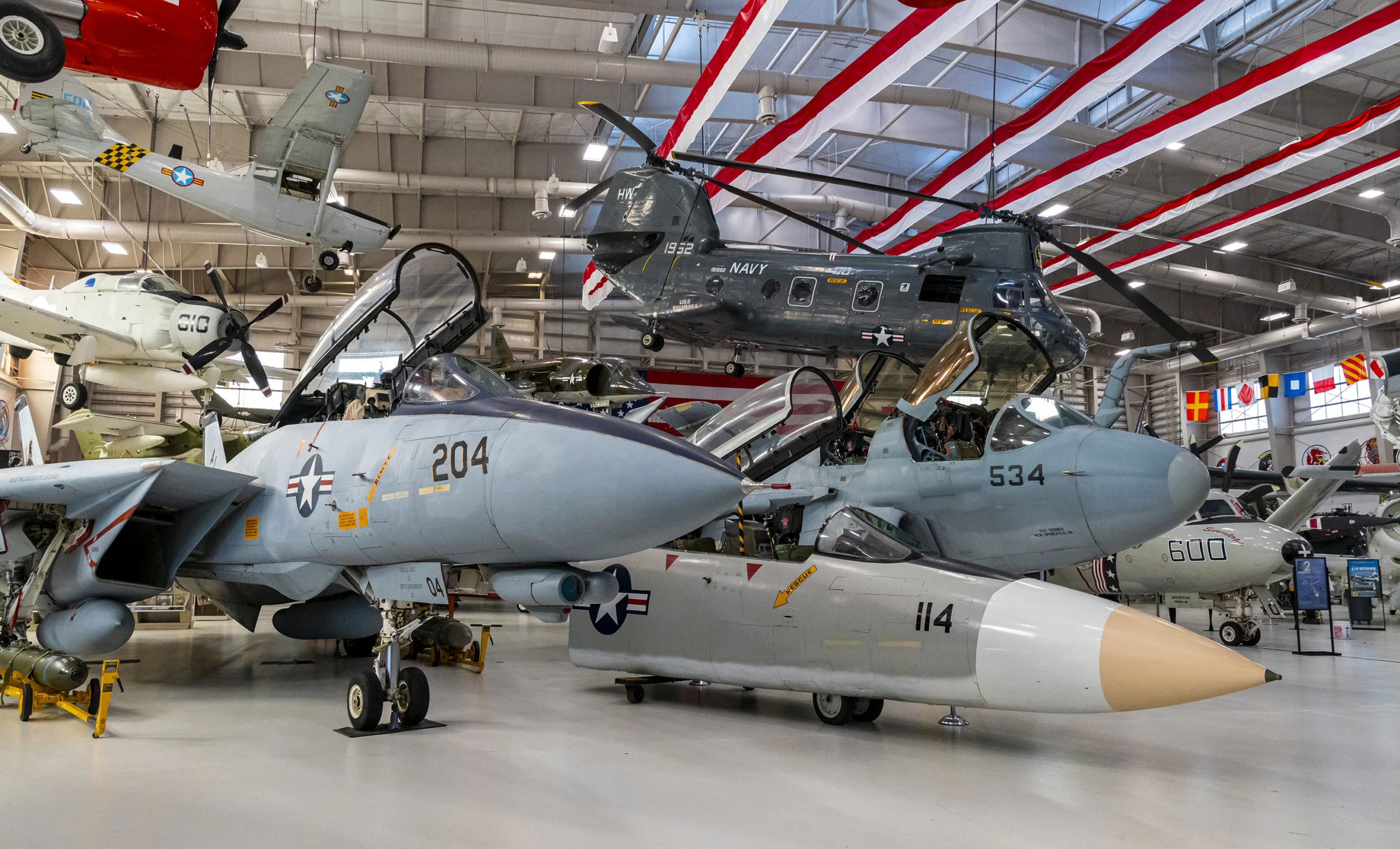
National Naval Aviation Museum Event Space is one of the strongest museum-backed event options on the Gulf Coast, with real banquet and reception capacity under the Blue Angels and a built-in Pensacola identity. It is ideal for sponsor receptions, military-adjacent programming, donor events, and memorable conference offsites.
On a Mobile show, every venue rewards crews who plan against its actual exhibitor manual, dock windows, and labor authority instead of a generic floor template.
Execution priorities
- Tie national naval aviation museum event space to the actual venue and event type before scope hardens.
- Make labor, freight, graphics, and show-day support work as one plan.
- Protect the event from avoidable handoff drift and late reversals.
The National Naval Aviation Museum Event Space footprint
The space shows up on our Mobile production calendar often enough that we know the building.
Located at 1750 Radford Boulevard, Ste B, NAS Pensacola.
Projects at the space start with its published floor plan, dock schedule, and service-order deadlines. Everything downstream — build, freight, install, labor — is planned against those real inputs.
The Mobile event landscape
Scope gets tighter; standards don't.
the Arthur R.
How Mobile floor operations work
Labor in Mobile runs venue-by-venue, not citywide.
Alabama's current statewide constitutional text preserves a right-to-work posture, which supports an open-market baseline rather than a blanket union requirement across the state by default.
Line items on a typical project
Projects at the space typically include design work, fabrication or rental sourcing, graphics production, show-service paperwork, freight, install, show-hours coverage, and strike.
The handoffs on a project at the space matter almost as much as the line items. Design has to hand a build-ready drawing to fabrication. Every handoff is a place quality can drop.
Those run alongside the engagement rather than inside it.
How a project runs
Venue coordination comes next.
Install days are owned by a single on-site lead.
During show hours, the booth is a live operating space.
That document drives the next booking.
What it costs and how fast it moves
Cost scales with how it is built, how big it is, what the venue charges for its own services, what the graphics look like, how far the crates travel, and how many days the team stays on-site.
Lead time drives everything. Custom: 16 to 20 weeks. Rental: 8 to 12.
How project performance gets measured
Trade show ROI is measured at the lead and pipeline level.
A week after the show, the booth's actual floor performance is already clearer than any pre-show projection. We document those observations alongside the technical closeout so the next cycle inherits real signal, not nostalgia.
How we're built to run your project
Trade Show Services of Mobile keeps the work local.
The difference from a national vendor shows up at the dock.
National Naval Aviation Museum Event Space planning questions
How does labor work in Mobile?
It runs venue by venue.
How much lead time is ideal?
Custom builds run best with 16 to 20 weeks of lead time. Rentals take 8 to 12 weeks.
What information kicks off a project?
The show, the venue, the booth number, the dates, and a target budget range. From those, an initial scope and a realistic cost come back within a few days.
Who runs the booth on-site?
One named show-site lead runs the install, the show hours, and the strike. That person carries the floor plan and the punch list from crates to doors and reports up once a day.
Can the booth travel to the next city on our calendar?
Same structure, swappable graphics, standard crates.
What happens if something breaks during show hours?
The on-site lead handles it.